
Travel Safety: Prepare for the Trip You Didn't Plan
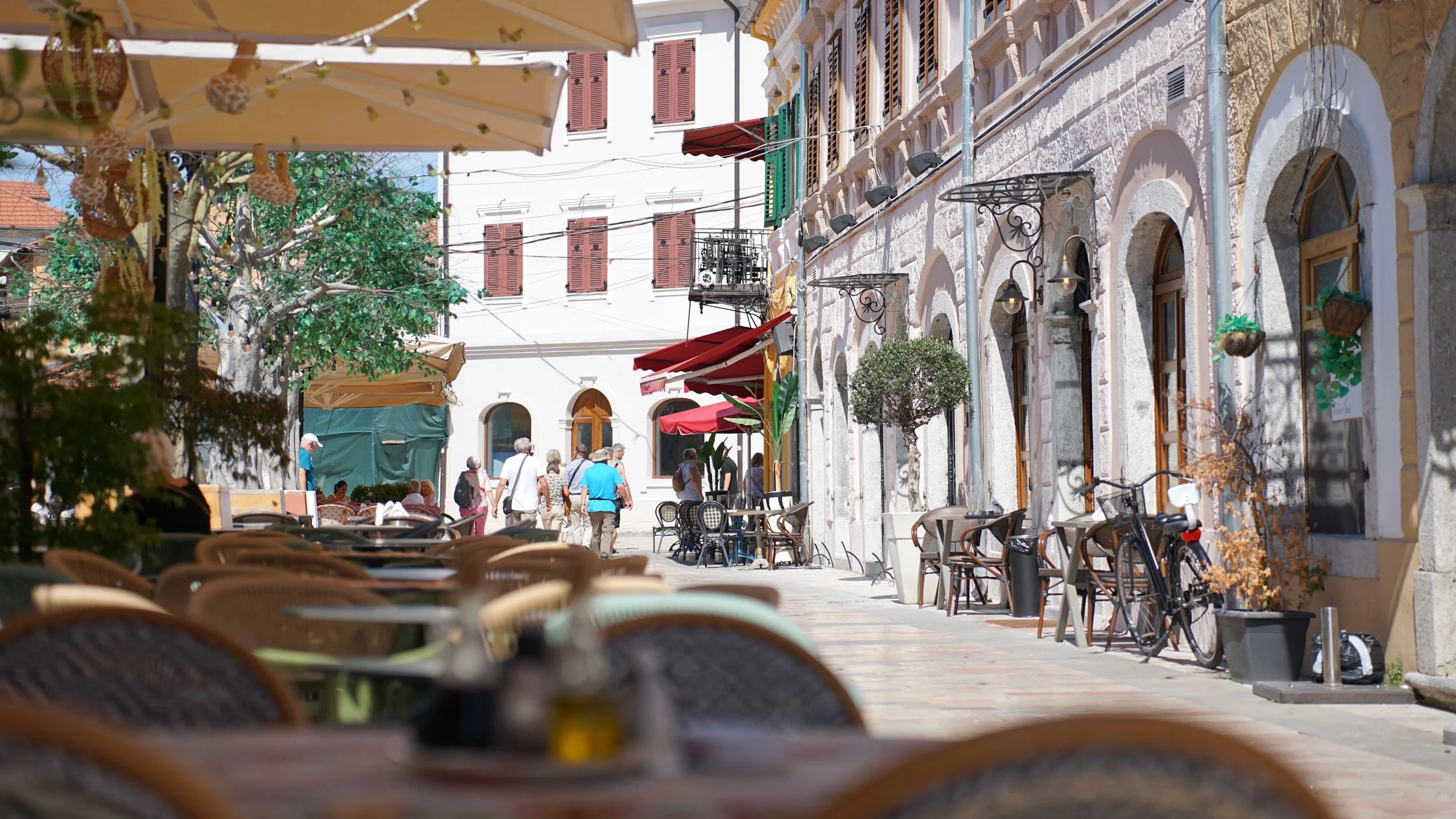
Photo by Sabina Kallari, via Pexels
A few things Sue and I have learned—some of them the hard way.
A warning before we start: this is a long read.
Travel safety isn't something I can responsibly reduce to six cute bullet points and a stock photo of a passport. If that's more reading than you bargained for, that's okay. I'm sure Cartoon Network has something on.
For everyone else, pour yourself a cup of coffee—or something stronger—and stick with me. Some of this could save you money, aggravation, or one really shitty day on what was supposed to be the trip of a lifetime.
Sue and I love to travel. We love getting off a cruise ship and wandering around someplace we've never seen before. We love finding a restaurant that wasn't on the itinerary, sitting at an outdoor café and watching the world go by. I take pictures of everything. Sue shops. I complain about Sue shopping. Sue ignores me and continues shopping. It's a system that's worked remarkably well for us.
But the more we've traveled, the more we've learned that you don't just prepare for the trip you're planning. You need to give at least a little thought to the trip you didn't plan.
Maybe your flight gets canceled. Maybe your wallet disappears. Maybe you get sick. Maybe your phone dies at exactly the wrong time. Sometimes it isn't anything you did at all.
While we were working on this article, Sue stopped me and said, “What about Indonesia in 2004?”
Well, shit. She's right.
People were vacationing around the Indian Ocean during the Christmas holidays when an enormous undersea earthquake triggered a devastating tsunami. Nobody sitting on a beach that morning expected their vacation to become a fight for survival. The same basic truth applies to hurricanes, wildfires, flash floods, earthquakes and other natural disasters: nature doesn't give a damn about your itinerary.
As Sue rather colorfully put it, the world isn't full of blue skies and unicorns handing out blow jobs and Valium to people on vacation.
You can't prepare for everything. We're certainly not suggesting you try. But you can do enough homework that when something goes sideways, you're not standing there completely clueless.
That's what this article is really about.
Know Where the Hell You're Going
People will spend six months researching a vacation. They'll know where the swim-up bar is, which restaurant has the best steak and that some guy named Steve on TripAdvisor thinks Room 614 has a better view than Room 612.
Wonderful.
Did you spend ten minutes looking at the U.S. State Department information for the country you're visiting?
We do. I want to know if there are current travel advisories and, more importantly, why they're there. I want to know about entry requirements, unusual laws, areas we're being advised to avoid and where the nearest U.S. embassy or consulate is located. We also use the State Department's Smart Traveler Enrollment Program, or STEP, when appropriate.
This becomes even more important when you're traveling somewhere with cultural or religious traditions very different from your own. Muslim-majority countries are a good example, but don't lump them all together. Morocco isn't Saudi Arabia. Turkey isn't Indonesia. Laws and customs involving alcohol, clothing, medication, photography, religious sites and public behavior can vary tremendously.
You're visiting somebody else's country. Their laws came with the place.
You don't have to agree with every one of them, but “I'm an American” isn't a diplomatic force field.
And while we're discussing foreign laws, Uncle Joe has one more piece of international travel wisdom: don't do drugs. Don't buy them, don't carry them and don't agree to bring somebody else's mysterious package through customs.
Still need convincing? Watch Midnight Express.
Before we travel, we also put weather apps on our phones and enable useful alerts. I'm not talking about checking whether it's going to be 82 degrees at the beach instead of 84. I want to know about severe storms, flooding, hurricanes, extreme heat, wildfires or whatever else may matter where we're going.
If you're traveling internationally, find out how local authorities communicate emergency information too. And if you're visiting somewhere known for a particular natural hazard, spend five minutes learning what you're supposed to do.
If local authorities send an emergency warning, read the damn thing. And if you're standing near the ocean in a tsunami-risk area after strong earthquake shaking and the water suddenly starts doing something very strange, don't stand there filming it for Facebook. Follow local emergency guidance and get somewhere safer.
You don't need to become a meteorologist or geologist before vacation.
Just don't go blindly.
We Were Supposed to Be Home
A few years ago, Sue and I were flying home from Miami after a cruise. The vacation was over, we'd checked our luggage, made it through the airport and were sitting at the gate waiting to board. At that point you're already mentally home. You're thinking about sleeping in your own bed, picking up the mail and all the other boring things you haven't thought about for a week.
About fifteen minutes before we were supposed to leave, our flight was canceled because of weather.
Okay. Shit happens. We'll get another flight.
Except we couldn't.
The next flight we could get home wasn't for two days, and our luggage had already disappeared somewhere into the airline system. Instead of going home, we suddenly needed a hotel, meals, toiletries and clothes to get us through the next couple of days.
I needed underwear.
Sue found Dolphin Mall.
And then Ralph Lauren.
I think that tells you just about everything you need to know about how the two of us handled being stranded in Miami.
Luckily, we'd purchased travel insurance, which covered eligible expenses from the delay, including our hotel, meals and replacement clothing. Suddenly that travel insurance we'd paid for before the trip didn't seem like such an unnecessary expense.
But clothing wasn't our biggest problem. We had packed enough of our regular prescription medication to get us through the vacation. We didn't forget it, and it wasn't sitting in our checked luggage.
We had taken all of it. Because we were supposed to be home.
That was something neither of us had really thought about before. We always made sure we had enough medication for the trip, but what happens when the trip lasts longer than it's supposed to?
Fortunately, our prescriptions were through Walgreens, and there was a Walgreens near the hotel that was able to help us with an emergency supply. On top of everything else, I was getting sick as hell by this point. Looking back, I suspect I may have picked up COVID during the trip, although I can't say that for certain.
Being sick, stranded in Miami and completely out of prescription medication was enough to teach us the lesson.
Now we pack an additional 72-hour supply of our regular medication in our carry-on. What's appropriate for someone else is something they should discuss with their doctor or pharmacist, especially when traveling internationally where medication rules can be different.
The lesson we took away from Miami was pretty simple:
Your itinerary says when you're supposed to get home. It doesn't mean you will.
Don't Be a Cheap Bastard. Buy Travel Insurance.
There's something funny about people and travel insurance. We'll spend $6,000 on the vacation, another pile of money on airfare, excursions, restaurants and clothes, and probably $300 on Amazon buying things somebody on YouTube said we absolutely cannot cruise without.
Then somebody asks whether we want travel insurance and suddenly we're Warren Buffett.
“Do we really need to spend the money?”
Maybe you'll never use it. I hope you don't.
Miami wasn't a medical catastrophe. It was weather, and our insurance helped cover eligible expenses we never expected to have. We've seen the medical side too.
Sue once needed medical care aboard a Carnival cruise. We had Blue Cross health insurance and expected reimbursement when we got home. Blue Cross refused our claim.
That doesn't mean your Blue Cross policy—or any other U.S. health plan—will work the same way. That's precisely why you should find out before you leave.
Does your health insurance cover you internationally? What about aboard a cruise ship? Are you expected to pay the provider and seek reimbursement later? What documentation do you need? What happens if you need medical transportation?
Don't discover the answers while lying in a hospital bed in Thailand.
Travel-insurance policies can provide various combinations of trip cancellation and interruption, delays, baggage, emergency medical coverage and emergency transportation. But the words travel insurance printed on the policy don't mean every conceivable problem is covered.
Read what you bought. Know the limits and exclusions, and keep the emergency-assistance information where you can actually find it. Sue and I have used both Generali and Allianz for our own trips.
Medical evacuation deserves particular attention because the cost can be enormous. A $6,000 vacation can suddenly involve tens of thousands of dollars in medical transportation expenses depending on what happened and where you are.
And don't assume “medical evacuation” means a private jet automatically flies you directly to your hometown hospital. Policy language matters.
Don't just buy travel insurance. Know what the hell you bought.
There's also a line a good travel advisor should understand. Unless they're appropriately licensed to sell or interpret insurance where required, detailed questions about coverage, exclusions and whether a hypothetical claim would be paid belong with the insurer or a properly licensed insurance professional.
Sometimes the right answer from your travel advisor is simply, “That's an insurance question. Let's get you to somebody qualified to answer it.”
Thirty Years in I.T. Apparently Followed Me on Vacation
Some people can throw clothes into a suitcase, grab a passport and go. They figure they'll deal with whatever happens when it happens.
And for a lot of people, nothing happens. They have a fantastic vacation and come home wondering why somebody like me thinks about half this stuff.
That's great.
I'm just not wired that way.
Thirty years in IT taught me about backups, redundancy and single points of failure. If Plan A stops working, I want some idea what Plan B looks like. Apparently that followed me out of the server room and into the way Sue and I travel.
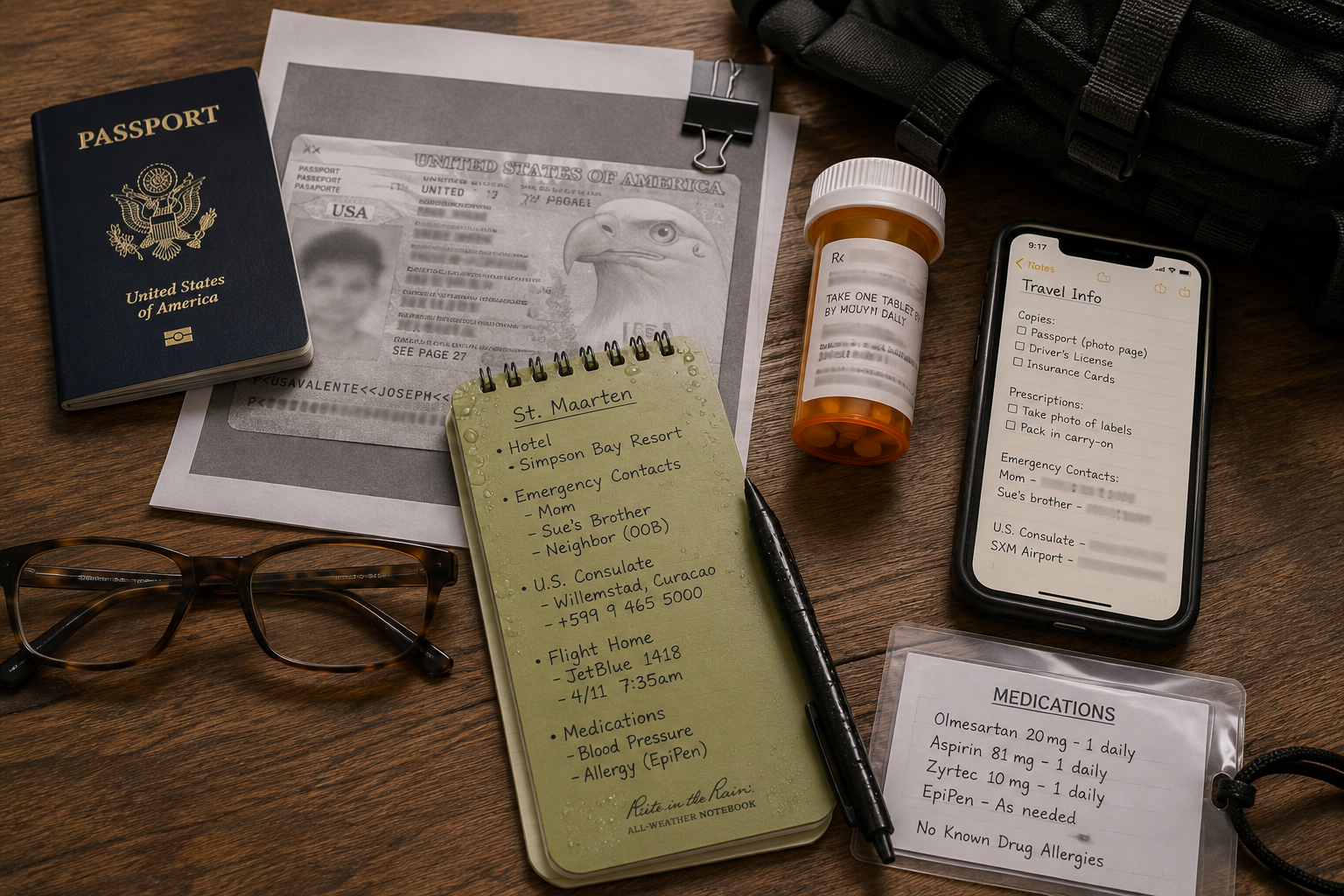
Before we leave, we photograph the information pages of our passports. We also print copies. I keep one, Sue keeps another, and someone we trust back home can access the information if necessary.
Our actual passports generally stay secured in the room safe while we're out exploring unless local regulations require us to carry them. That's something you need to check for wherever you're going. A photograph or photocopy isn't a replacement for your passport, but if the real thing disappears, having the information available is better than standing at a consulate saying, “I think the number started with a four.”
We do something similar with prescription medication. We photograph the actual prescription labels showing the drug, dosage, prescriber and pharmacy information. Again, the photograph doesn't replace whatever documentation a country may require. It's backup information.
And despite spending three decades working with computers, one of my favorite travel technologies is still a piece of waterproof paper.
I carry a Rite in the Rain notepad or index card. I've used it for our cruise schedule, port arrival and departure times, other ships in port, hotel information, important telephone numbers and emergency contacts.
Most of that information is also on my phone, of course. But phones get lost, stolen and broken. Batteries die. Cellular service disappears.
My waterproof index card doesn't need a password, Face ID, cellular signal, software update or charger.
The index card doesn't give a shit.
Sometimes paper still works.
Your Phone, Your Digital Life and the Rental Car You're Giving Back Tomorrow
Think about what's accessible from your phone: email, banking, credit cards, airline reservations, hotel information, photographs, contacts, authenticator apps and probably half the other important pieces of your life.
Treat it accordingly.
If we're using public Wi-Fi at an airport, hotel or coffee shop, we use a VPN. Ours is Private Internet Access—PIA. I'm not going to turn this into a networking class. At the simplest level, a VPN encrypts the connection between your device and the VPN service and masks your public IP address. It can also let your connection appear to originate from another location, although banks and other services use many other signals and may still question an unusual login.
Here's the version most people need:
Public Wi-Fi? Turn on the VPN and move on with your life.
The bigger danger is often the person holding the phone.
Your bank sends an urgent text with a link? Don't panic and click it. Open the bank's legitimate app yourself. Your airline says your reservation has a problem? Go directly to the airline. The hotel supposedly needs your credit card immediately? Call a number you independently know belongs to the hotel.
Criminals love urgency because urgency makes otherwise intelligent people do stupid things.
Same with QR codes. A QR code is basically a link you can't read before scanning it. The one professionally printed on the restaurant menu is one thing. A crooked sticker pasted over a parking meter deserves another look.
And this entire article originally began because I disappeared down a cybersecurity rabbit hole involving SIM cards. The technical research is fascinating if you're the kind of person who thinks this stuff is fascinating. Most people aren't.
The practical lesson is simple: get your international cellular service from somebody you trust. Research your carrier, reputable eSIM providers or legitimate local carriers before you leave home. If you're planning on using an eSIM, make sure your phone is unlocked before discovering at baggage claim that your shiny new BlowPhone 2000 can't use it.
I also don't plug my phone into random public USB ports. We carry our own charger and power bank. If some unknown Bluetooth device asks to pair with my phone at the airport, the answer is no.
Then there's the rental car.
Modern rental cars are computers too. You connect your phone for CarPlay or Android Auto, synchronize contacts, make calls and use navigation. Before returning the car, remove your phone and clear whatever personal information the vehicle retained where appropriate.
You remembered your sunglasses and removed the Dunkin' cup from the cup holder.
Take your digital shit with you too.
Protect Your Money — And Don't Advertise It
Sue and I use an American Express Gold Card for travel. I call it our “Oh Shit” card.
It has no preset spending limit, which is not the same thing as unlimited spending. Transactions still have to be authorized and spending capacity varies. What matters to me is having a travel card we trust and a company we can call if something serious happens.
We also carry a Visa or Mastercard because American Express isn't accepted everywhere, and we don't keep every financial resource in one place. If your wallet disappears and every card and dollar you brought disappears with it, you didn't have backups. You had a collection.
I also avoid using our debit card for travel purchases. Yes, debit cards have fraud protections. My concern is much simpler: it's connected directly to the checking account containing our money.
I'd rather dispute an unauthorized transaction involving a credit card than wake up and discover someone has been screwing around with the checking account paying the mortgage, utilities and automatic bills.
And while we're talking about money, don't advertise it unnecessarily.
Sue and I aren't walking around looking like we're hiding from Interpol. We like looking good. But when we're exploring, we wear plain wedding bands and Sue's diamond stays secured. If you own a Rolex, leave the damn thing behind.
If you can afford a Rolex, you can afford a Timex or Casio.
I'm also a fan of my Duluth Dry on the Fly cargo shorts. They're not pickpocket-proof, but some of the Velcro pockets are annoying enough that I have trouble getting my wallet out.
That's good enough for me.
You don't need to make theft impossible. Make yourself inconvenient.
Says the Guy Who Put His Canon on the Table
Of course, after telling you not to advertise expensive things, I should probably confess that I travel with an expensive Canon digital camera.
I replaced the bright Canon-branded strap with a plain gray one. Does that magically disguise an expensive camera? Of course not. But I don't need a bright red CANON billboard around my neck either.
And despite thinking about this stuff far more than the average person, I still screw up.
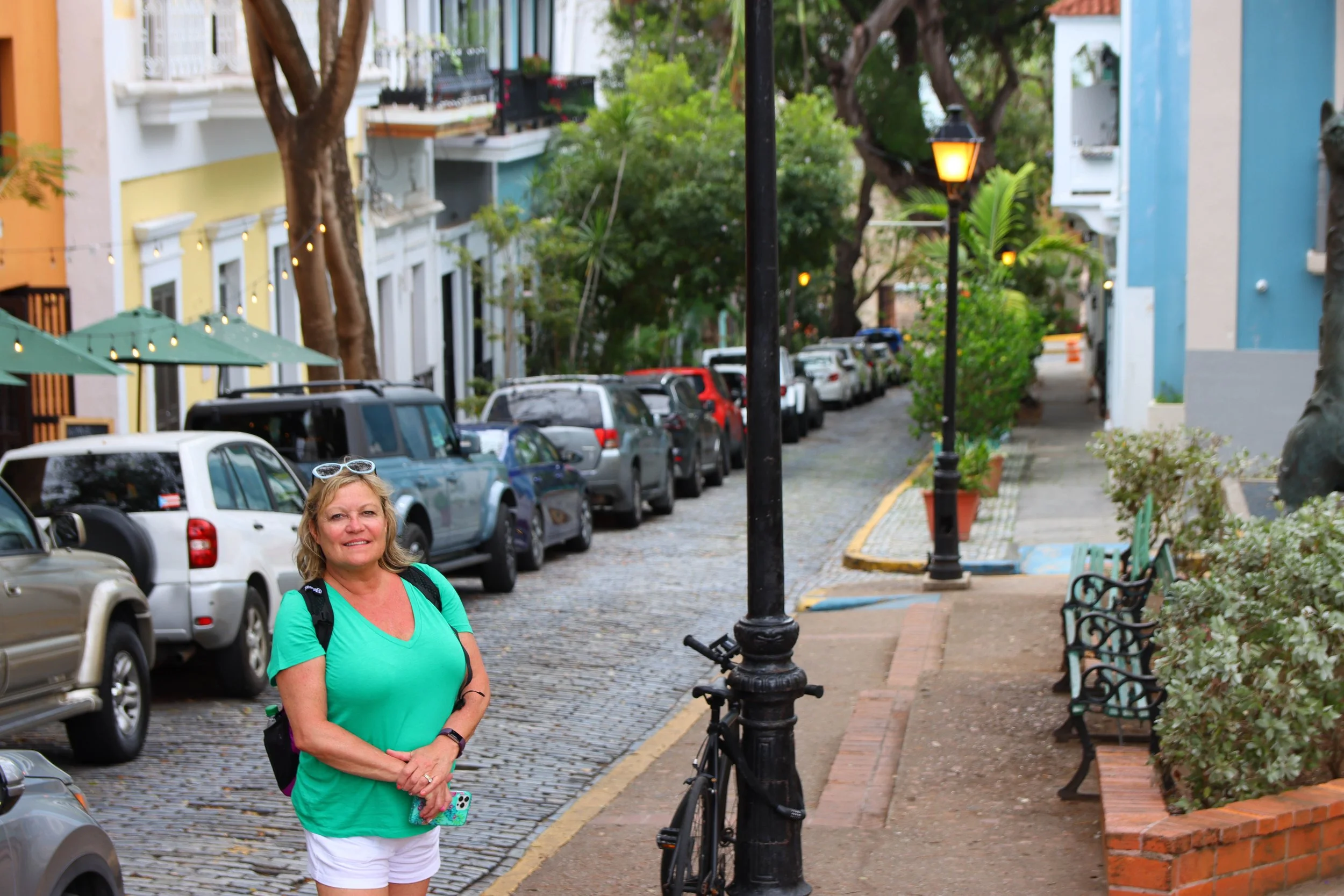
Sue and I were sitting at an outdoor café in Old San Juan one afternoon. I took the camera and casually put it right on the table.
Sue looked at the camera, then looked at me.
“You're just going to put your camera on the table like that?”
I knew exactly what she meant.
All it would take was a couple of seconds. The waiter asks me something. Sue gets my attention. I look the other way. Somebody walking past sees the camera, grabs it and keeps moving.
Boom.
The camera is expensive, but ultimately replaceable.
The photographs and video on the memory card might not be.
That same thinking applies to everything else you're carrying. Maybe you and your spouse have spent the morning shopping and stop somewhere for lunch. The shopping bags go on the floor. You get up to use the restroom and assume your spouse knows they're now responsible for everything.
Maybe they don't.
“Watch our stuff for a minute.”
Five seconds.
Most opportunistic thieves don't need you to be an idiot. They need you to be distracted.
Which brings me to one of the simplest things we do when traveling.
Look up.
You're sitting at an outdoor café in Rome or Paris with a glass of wine in front of you, surrounded by architecture you've seen in photographs your entire life, and you're staring at Facebook.
Put the damn phone down.
Pay attention to what's happening around you. I'm not suggesting you judge people by what they look like or assume everybody carrying a backpack is dangerous. Watch behavior.
Someone seems unusually interested in your belongings? Notice it. An argument nearby is getting increasingly aggressive? Notice it. Police or security suddenly start moving with purpose? Notice it. Something about a situation simply doesn't feel right?
Move.
You don't win a prize for staying somewhere that makes you uncomfortable.
Europe isn't immune from crime or terrorism. Neither is the Caribbean. Neither is the United States. And you're not magically protected aboard a cruise ship either. We've called these ships floating cities before. Well, a city with 5,000 or 6,000 people aboard still contains thousands of strangers.
You're on vacation.
Human nature isn't.
And there's another benefit to getting your nose out of your phone: you actually notice the place you spent thousands of dollars to visit.
The buildings. The music. The little alley. The old guy drinking espresso. The smell coming from the bakery.
You notice Rome.
That's not paranoia.
That's traveling.
The Egg Roll:
Some lessons are harder to forget than others.
I have a serious peanut allergy, and when I leave a ship, resort or hotel, my prescribed emergency medication comes with me. Sue carries a backup EpiPen separately.
Years ago, we were eating at a local Chinese restaurant and ordered a pu-pu platter for two. I took one bite of an egg roll and immediately knew something was wrong.
Oh shit.
We got the waiter over and discovered they'd used peanut butter as a binder in the egg roll. I followed my emergency plan, and thankfully the medication did its job.
That happened close to home. We spoke the language, knew where we were and knew how the medical system worked.
Now imagine the same thing happening twenty miles from a cruise ship in a country where you don't speak the language.
An EpiPen sitting safely in your cabin isn't particularly useful then.
I'm not going to tell anybody what medication they should carry or what they should do during a medical emergency. That's between you and your healthcare professional. What I will say is this: if your emergency plan says you need something available, have it with you.
For serious food allergies, an accurately translated allergy card can also be worth considering when language is an issue. This isn't where I want some questionable translation app turning “I have a life-threatening peanut allergy” into “The American gentleman isn't particularly fond of cashews.”
And remember our Miami lesson.
Don't necessarily pack medication only for the trip you planned.
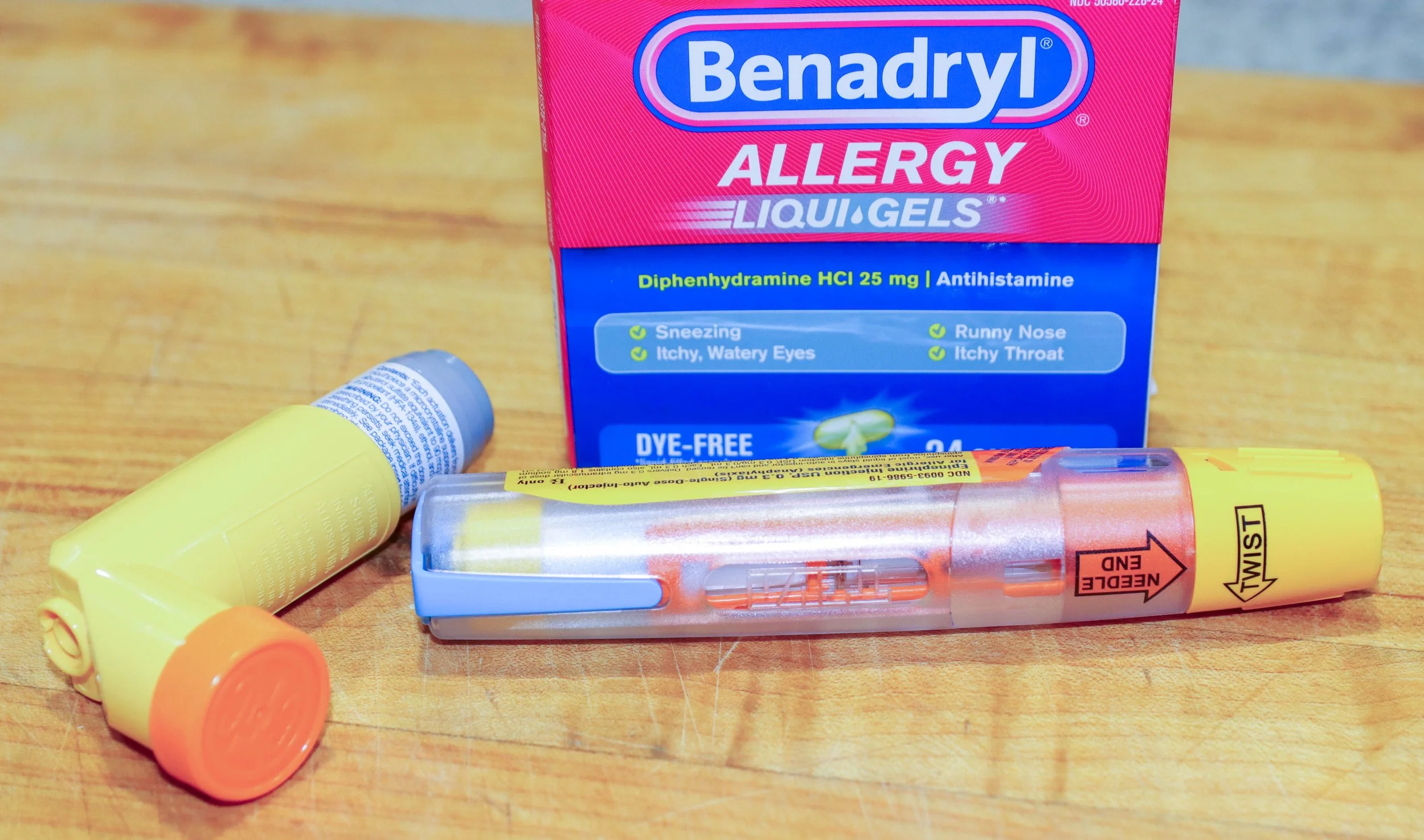
My emergency allergy medication comes with me when we leave the ship, hotel or resort. Sue carries a backup epinephrine auto-injector separately.
Leave a Breadcrumb — Then Go Enjoy Yourself
If Sue and I are heading out independently for the day, particularly somewhere unfamiliar, I like somebody to have some idea where we've gone.
Maybe we're staying at a resort and renting a car. Maybe we're getting off a cruise ship and exploring on our own. Depending on the trip, a trusted person back home may have our itinerary, and we may leave basic information about where we're headed and when we expect to return.
Not passport numbers. Not financial information. Not the combination to the safe.
Just a breadcrumb.
If something happens and we don't come back when expected, at least there's somewhere to start.
I also travel with a small portable carbon monoxide detector when we're staying at hotels or resorts. Carbon monoxide is colorless and odorless, the detector takes up almost no room, and once it's set up I forget about it.
When we get into an unfamiliar hotel, I also notice where the emergency exits and stairs are.
That's about thirty seconds of my vacation.
Then I'm done.
I'm not inspecting the boiler room or demanding maintenance records from the resort manager.
Pool. Beach. Beer.
I hope I carry that carbon monoxide detector around the world for another twenty years and it never makes a sound.
That would be an excellent return on investment.
And that's really the point of everything we've just talked about.
Some people can pack up and go. Nothing happens, everything works out, and that's great.
I'm not wired like that.
Thirty years in IT taught me to have a backup plan and a fallback plan. If Plan A breaks, I want some idea what Plan B looks like. But that doesn't mean I spend our vacations waiting for something terrible to happen.
I do the exact opposite.
I prepare for this stuff so I can stop thinking about it.
Don't go into a vacation blindly because you saw glossy pictures in a magazine, on a website or in somebody's perfectly edited social-media feed. Those pictures can show you the beach. They can't tell you whether your health insurance works there, what the local laws are, how you'll get help if something goes wrong or what you're supposed to do when the weather suddenly turns ugly.
That's your homework.
Do it before you leave.
Then go.
Because this is a great big, beautiful world, and Sue and I still haven't seen nearly enough of it.
Get off the ship. Walk down the street. Sit at the café. Order the wine. Talk to somebody. Try something you've never eaten before—after I check it for peanuts. Let Sue find a store. Hell, let her find an entire mall.
Go explore.
Make memories.
Most of the time, the plane lands, the suitcase arrives, the medication stays in the bag, the travel-insurance company never hears from you and that carbon monoxide detector sits there doing absolutely nothing.
That's exactly what we want.
Prepare for the trip you're planning. Give some thought to the trip you didn't plan. Then put the damn phone down and enjoy the one you're actually on.
Helpful Government Travel Resources
We aren't trying to replace official travel guidance. These are some of the government resources Sue and I check when planning international travel.
U.S. State Department — International Travel Checklist — This may be the best single link in the entire article. It covers destination information, advisories, passports, local laws, medication, document copies, insurance and STEP. Interestingly, the State Department specifically recommends making copies of travel documents, leaving copies with someone you trust, and taking photos of them—exactly what you and Sue already do.
U.S. State Department — International Travel Planning & Travel Advisories — Destination-specific safety information, entry requirements, local laws, embassy information and current Travel Advisory levels.
Smart Traveler Enrollment Program (STEP) — Enroll a trip so the nearest U.S. embassy or consulate can send security, demonstration, health, weather and natural-disaster alerts and help reach you or your emergency contact during an emergency.
U.S. State Department — Medicine and Health Abroad — Particularly relevant to our medication and travel-insurance sections. It covers overseas health coverage, prescription restrictions and medical evacuation. The State Department currently notes that air-ambulance evacuation back to the U.S. can run roughly $20,000–$200,000, depending on location and medical circumstances.
CDC Travelers' Health — Destination-specific health information, vaccination recommendations and current Travel Health Notices. This is something I'd absolutely check before international travel.
Medicare — Travel Outside the United States — Very useful for our audience. Medicare generally doesn't cover healthcare outside the U.S., although there are limited exceptions and some Medigap policies may provide foreign emergency coverage.
CISA — Traveling With Internet-Connected Devices — This backs up the cybersecurity portion of the article. CISA specifically warns about conducting sensitive business such as banking over open public Wi-Fi.